

MontPIRG is organizing to protect Montanans’ guarantee of a clean and healthful environment.
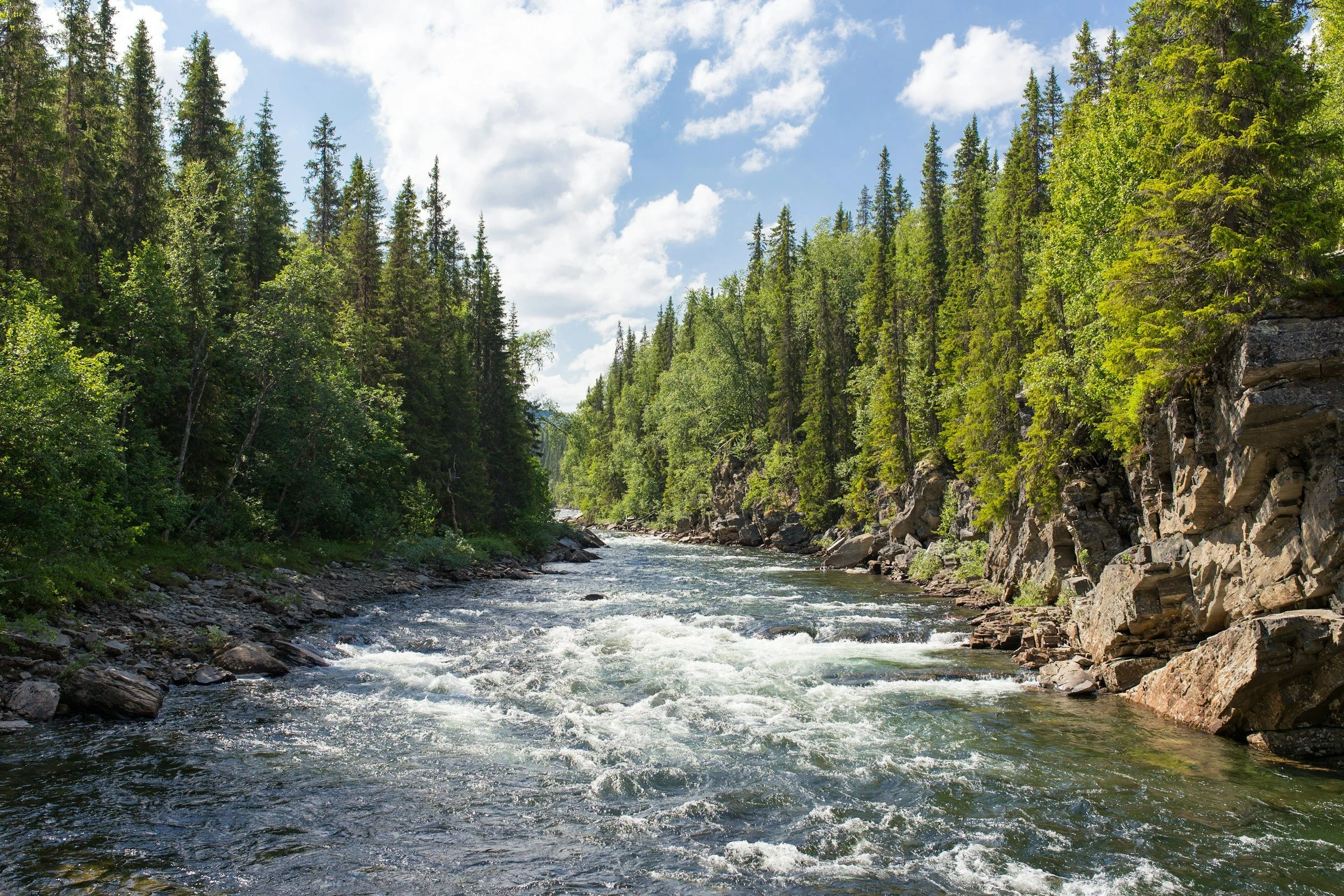
Western Montana is defined by clean water, healthy ecosystems, and communities that depend on both. The Smurfit Stone site sits along the Clark Fork River, where past industrial activity continues to raise concerns about long-term environmental and public health impacts.
If you want a clear, accessible overview of why this site matters and what’s at stake, explore the resource below.
Smurfit Stone Working Group
The Smurfit-Stone Site Full Guide
-
The Smurfit Stone Mill opened in 1957 in Frenchtown and closed in 2010, leaving behind numerous wastewater ponds, built during the operation of the mill for the purpose of storing waste chemicals. The mill is located directly next to the Clark Fork River. The river flows 350 miles, from just west of Butte to Lake Pend Oreille in Idaho. It runs through cities like Deer Lodge, Drummond, Thompson Falls, and of course, Missoula. The mill’s contaminants threaten the Clark Fork downstream of the site, and the communities and ecology that depend on it. Article II of the Montana Constitution grants Montanans the inalienable right to a “clean and healthful environment”. There is already legal precedent for it, as we saw in Held v. Montana (2024). Every Montanan has the right to a healthy environment, free of pollution.
-
Some contaminants found on or near the Superfund site are heavy metals such as arsenic and manganese, along with contaminants that are hydrophobic, like furans and dioxins, and lastly, there are PCBs that have been found on or near the site. It is important to get a variety of samples from this site because, since there are hydrophobic contaminants, meaning contamination is not uniform, one spot could have entirely different contamination than another one, only twenty feet away. It is very likely that a higher quantity of these contaminants can be found in the area; however, it is difficult to detect these contaminants from limited water samples because they do not break down easily in water. Numerous samples from fish, soil, and water are necessary to understand the true breakdown of contaminants in the area.
-
Contaminants such as arsenic, manganese, furans, dioxins, and PCBs can all contribute to health issues when exposed. Main health issues associated with these contaminants are cancer, reproductive issues, neurological disorders, weakened immune and endocrine system, and organ damage. These are all things that people should be worried about when it comes to their health, but there are also many negative effects on the environment, such as degrading the ecosystem and killing species up the food chain through bioaccumulation, where toxins move up the food chain, including into humans who eat fish from the river. There is currently a 148-mile-long fish consumption advisory along the Clark Fork, most of it being downstream of Smurfit Stone. Fish, Wildlife, and Parks has not officially stated the mill to be a contributor to the advisory, despite the known history of fish kills and contamination caused by the site. It is also worth noting that fish that have absorbed contaminants into their system are capable of swimming upriver, meaning anglers are still at risk of eating contaminated fish, even if they caught it upriver from the site.
-
The site is situated on 3,200 acres of historic floodplain, with about 150 acres being the core industrial profile of the site. The rest of the area is agricultural land and wastewater storage. There is an estimated 800,000 gallons of contaminated sludge and 300 billion gallons of wastewater stored at the site in unlined ponds, leaching into the groundwater and the river. The ponds are separated from the river itself by a berm, but once a large enough flooding event occurs, the river will spill over the berm and wash into the river all of the pollution and wastewater from the site, irreversibly damaging the ecosystem and causing public health issues down the length of the river. The toxins leaking into the groundwater and the river pose human and environmental health risks.
-
The Clark Fork River runs through the ancestral territories and fishing waters of the Confederated Salish & Kootenai Tribes (CSKT) and their current Reservation. The Flathead Reservation is downstream from the Smurfit-Stone Site, meaning that many of the contaminants from the site heavily affect tribal members' treaty rights to hunt and fish in their ancestral territories. The Smurfit-Stone Superfund Site, in turn, violates the rights of the tribe given by the 1855 Hellgate Treaty. To find further information directly from the tribe, including ways in which you can donate/help, refer to the official CSKT webpage, which is incredibly easy to navigate and informational.
Includes a Natural Resources section, which can bring you to the TribalEPA division and Parks, Recreation, and Wildlife Division
-
Numerous nonprofits and government agencies are involved with Smurfit Stone, from the EPA to local nonprofits, like the Clark Fork Coalition. The primary group for public updates regarding the Smurfit Stone Site is the Frenchtown Community Advisory Group (CAG).
Links to stakeholder websites:
■ Official EPA Smurfit-Stone Website
-
The common name of “Superfund” stems from the Comprehensive Environmental Response and Liability Act (aka CERCLA). This act was created in order to ensure the cleanup of toxic sites that threaten environmental and human health. The birth of CERCLA introduced a large tax on hazardous industries, such as major chemical production sites. This tax, in turn, created a large trust of money which the government keeps and uses to clean up CERCLA sites, leading to the name “Superfund”. The process of cleaning up a Superfund site usually involves 8 long stages, which tend to look like a snake when being illustrated in a timeline, hence the nickname “Superfund Snake”. This nickname truly expresses how long and winding the process can be. While each site has its own timeline, many sites like Smurfit-Stone can take decades to be cleaned up due to the slow pace of government processes. Each step, labeled in both our Superfund Snake Timeline and Smurfit-Stone Zine, is a rigid legal process that can be difficult to understand at times. While the Superfund Snake can be long and frustrating, it is vital for community members who live near Superfund Sites to keep up with the steps of the snake and truly understand it. This allows the community to hold the government systems that enforce the Superfund process accountable. To learn about the Superfund process more in depth, you can navigate to the EPA’s Superfund website.
-
Some things you can do to help move the Superfund process along in your favor are: talking to others about the topic to spread the word, and showing up to the Frenchtown CAG (community advisory group) meetings, which are held on the first Thursday of every month in the Frenchtown Rural Fire District from 6-8 pm. You can also talk to county and state officials, and learn about and advocate for treaty rights and how the Confederated Salish and Kootenai Tribes are affected. Other ways you can make an impact are by pressuring higher government agencies, such as the EPA and the DEQ, to take more samples of contaminants for testing the site. With more samples of the site, there is more evidence that it needs to be cleaned up. The Superfund process is long and follows a strict set of guidelines and procedures set by the EPA. The most important thing you can do is to stay active and keep up to date with the progress of the site. Eventually, the EPA will release a proposed cleanup plan, which will be open for public commentary. An educated and aware public is essential for making sure the site is fully rehabilitated and that the environment and community will be protected.
-
The Smurfit Stone mill opened in 1957, along the banks of the Clark Fork River just 3 miles Southeast of Frenchtown, MT, and about 11 miles downstream of Missoula. The mill manufactured pulp from timber byproducts from the local forestry industry. The pulp was used to manufacture paper products, like cardboard. The mill was built along the banks of the Clark Fork River with the intention of releasing waste chemicals into the water. For 39 years, the mill used bleach to whiten the pulp, which was also released in the river. Almost immediately, locals observed discolored water downstream of the site, as well as dead fish. CSKT was not consulted about this and was excluded from the issue. Following directives from the Missoula County Health Department, in the 1960s, the mill added wastewater and sludge ponds to store waste chemicals, but was still permitted to dump waste directly into the river during high water/runoff periods in spring. The mill also began to store wastewater and chemicals in unlined ponds, which remain to this day, leaching into the groundwater aquifers.
-
The mill closed in 2010, leaving behind a contaminated property spanning 3,200 acres of historic floodplain. The main industrial section of the site comprises about 100 acres, and over 900 acres of the site are unlined wastewater ponds, some of which were drained and are used to store solid landfill waste. There are also 193 acres of sludge and garbage dumps (MissoulaCounty, 2023). There were a lot of discussions about what the site would become, and the initial discussions about the site’s future were optimistic:
“This will not become a new Berkley Pit. This is a facility that will be completely cleaned up before Smurfit Stone Container leaves Montana.” -Montana Governor, Brian Schweitzer (KPAX-TV, 3/10/2011)
“Well, we’re very grateful the governor came over, and he’s taken the stand he’s taken. I think we’ve got a viable mill here, and it would be a shame to have it scrapped. And especially if we don’t hold Smurfit to cleaning it up, that would be a complete environmental disaster. So, we are very glad he came over. He cares about it deeply, obviously, so hopefully some good things will start to happen.” -Former Missoula County Commissioner Bill Carey, 3/10/2011
“We discussed our plans with the (Montana Department of Environmental Quality) at that time and have since implemented all activities as promised. This work is now complete, and we believe all environmental issues at the mill have been appropriately addressed.” -Lisa Esneault, Smurfit Stone Company Spokeswoman, in an email to the Missoulian (March 12th, 2011)
A company called the Green Investment Group, parent company of M2Green, bought the site in May of 2011 for $20 million to redevelop it into an alternative fuels facility. M2Green wanted to use the site to manufacture windmill parts and wood pellets. Montana politicians were excited; the site showed good promise for development, bringing in jobs and economic benefits.
“There’s no reason why, with the infrastructure that’s here, we can’t end up with fifteen, twenty, thirty more businesses, maybe combining recycling and energy” -Ray Stillwell, President of the Green Development Group, May 5th 2011, KPAX-TV
After the closure of the mill, redevelopment seemed like it would happen soon, and the Smurfit Stone company said that they addressed all of the environmental issues at the site before they sold it to M2Green, so why is the mill just sitting there 16 years after its closure?
The EPA entered an Administrative Order on Consent with M2Green, Westrock, and International Paper in 2015, and listed them as Potentially Responsible Parties (PRPs). A PRP is essentially a party deemed by the EPA to be wholly or fully responsible for the cleanup of a site. The issue is that each of these groups is behind on taxes and simply does not have the money to realistically clean up the site. At the same time, the EPA still has not placed the site on the national priorities list, which would get the site more federal funding for cleanup, because the EPA has already listed PRPs. The PRPs agreed to conduct extensive sampling of the river, the soils, and the groundwater at the site to determine the extent of contamination. After all this time, testing is still ongoing. Missoula County went to court in 2017 to attempt to recoup financial losses for the county, as well as the Frenchtown School and Rural Fire District, but it still has not had its losses recouped by the PRPs (Missoula County, 2023).
The Community Advisory Group (CAG) was formed in 2017 in order to facilitate community engagement and involvement. The CAG meets on the first Thursday of each month, at 6 pm at the Frenchtown Rural Fire Station. Their meetings are routinely attended by Montana representatives, as well as representatives from such organizations as the Montana Department of Environmental Quality, the Clark Fork Coalition, and the EPA. The work with the Smurfit Stone Site is ongoing and is a long and difficult process. Currently, the EPA estimates the remedial investigation phase to be over by the end of the year, where they will begin the feasibility study.
-
The Smurfit Stone Mill, sixteen years after its closure, is still sitting abandoned, littered with contaminated ponds and chemicals. It still sits, leeching chemicals and pollutants into the groundwater and river, endangering the communities and ecology in the area. As soon as a large flood hits it, the contaminants will be washed downstream, imperiling everything in their path. The superfund process is long and complicated, but you can help by staying educated, reading any news about the process, and attending CAG meetings to stay informed on the status of the site. Once the EPA releases a cleanup plan open for public comment, an informed and active community will be essential to holding the EPA accountable for rehabilitating this 3,200-acre stretch of historic floodplain and protecting the health of everything downstream of it.
This guide was made by the Spring 2026 MontPIRG Smurfit Stone Working Group: Jack Baranski, Eva Santos, Abby Brown, Courtney Rosenberg and Maria Kouidi. We hope it will be helpful to increase public knowledge and involvement in the Smurfit Stone Superfund Site. Thank you for reading, and thank you to everyone who made it possible.
Protecting our Outdoors
“I’m in love with Montana. For other states I have admiration, respect, recognition, even some affection. But with Montana it is love. And it’s difficult to analyze love when you’re in it.” - John Steinbeck
There is no doubt that what we have in Montana is special. Whether is the flowing rivers filled with trout, the wide prairies in the east, or the towering mountains in the west - Big Sky Country is set apart from the rest. That's why MontPIRG has worked tirelessly for over 35 years to protect the wild places from the out-of-state companies that seek to pollute, destroy, and exploit her beauty.
If you would like to learn more about MontPIRG’s various environmental work, please sign up for and check out our Environmental Newsletter by clicking the button below!
Looking for more ways to help?
By supporting MontPIRG, you will ensure that we can continue to fight for the protection of Montana’s rich wilderness. We empower the next generation of civic leaders to create change, and by donating today, you can too.
Thank you for your support of MontPIRG and Montana!
